
 USD (US$)
 AUD (AU$)
 CAD (CA$)
 EUR (€)
 GBP (£)
 JPY (¥)
Perched dramatically on a plateau overlooking the Dead Sea, Masada serves as a symbol of courage, determination, and national identity. This ancient fortress, now a UNESCO World Heritage Site, offers breathtaking views, rich history, and a story of heroism that resonates to this day. Although there’s a cable car today, the impact of reaching the top of Masada hasn’t faded. At the summit, the enormous Israeli flag serves as a vivid reminder of the enduring inspiration Masada provides, not only to tourists but also to generations of Israeli soldiers who continue to swear oaths here.
Read on to learn more about Masada’s history, archaeological significance, symbolic importance, and what visitors can expect when visiting this remarkable site.
History of Masada
The fortress was built in the year 30 BCE by King Herod, whose architectural feats have left their mark throughout the country. At the beginning of the great revolt against Rome in the year 68 CE, the site was conquered by a group of Jewish zealots, and Masada became their last stronghold.
In the year 72, the Romans besieged Masada and succeeded in reaching the steep fortress after constructing a huge earthen ramp on its western side. In the year 73, the 960 Jewish zealots living at the top chose to commit suicide rather than fall into the hands of the Romans alive. Their deeds left behind a saga of courage, heroism, and martyrdom.
The remains of the fortress are well-preserved and have been reconstructed in an effort to pay homage to the site as well as its heroic inhabitants. The most impressive structure remaining is King Herod’s northern palace, built on three rock terraces overlooking the gorge below.
Near the palace is a large Roman-style bath house with a colorful mosaic floor and walls decorated with murals. Many other buildings at the site - such as the luxurious western palace, the mikveh (Jewish ritual bath), storerooms, watchtowers, and synagogue relate to the history of Masada, especially when viewed with artifacts such as storage containers, decorated pottery, scrolls, and coins.
The beautiful embossments and murals that were discovered on the walls of buildings on the site were restored by Italian experts to preserve them for years to come. This is the largest and most complete Roman siege camp that remains today.
Climbing Masada

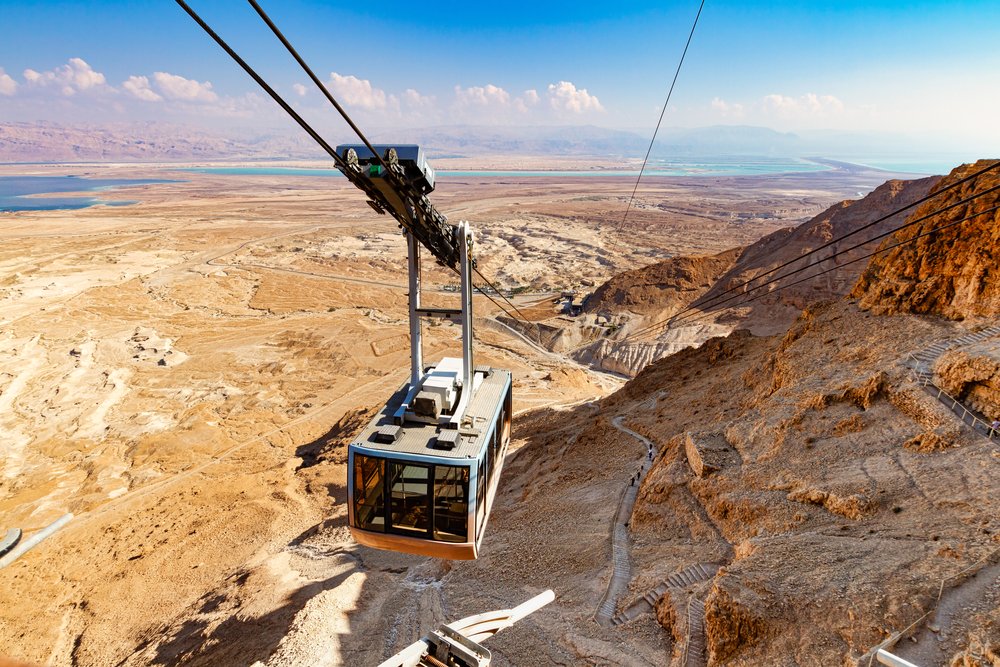
Masada towers high above the desert and can be ascended on foot via the winding “snake path”. Another way to reach the top is through a cable car that runs from the tourist center at the foot of the mountain to the summit. The tourist center also features a movie about the story of Masada, a model of the site, and an exhibit of the archeological findings.
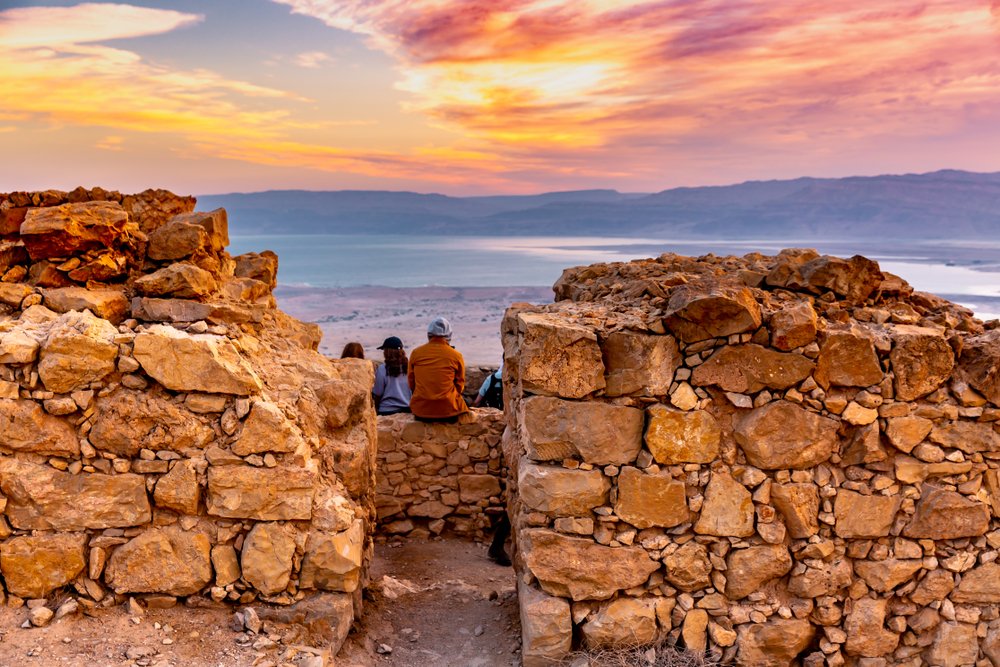
Many like to climb Masada at sunrise, which has become something of a tradition, particularly due to the spectacular view of the Moab Mountains and the Dead Sea. The most seamless and remarkable way to experience this is through our Masada Sunrise, Ein Gedi & Dead Sea Tour, available from May 2026, in which you’ll hike up Masada to witness the gorgeous sunset, discover the lush Ein Gedi Nature Reserve, and float in the relaxing waters of the Dead Sea, accompanied by a knowledgeable guide who brings the history and scenery to life.
Events
In addition to the archaeology, the site’s amazing and iconic setting has made it a popular place for concerts and events throughout the year. There is also a thrilling sound and light show, presented against the dramatic backdrop of the western side of Masada, which tells the story of the rebels’ last days at the cliff-top fortress. This takes place throughout the summer months; there are many events around the site, including concerts and a prestigious opera festival.
Visiting Masada
The most magical time to visit is as the sun rises above the desert. Tourists can easily do this from Tel Aviv or Jerusalem.
Tours of Masada
There are many tours that leave from Jerusalem or Tel Aviv. These provide many tourists with the opportunity to access the site because public transport, whilst accessible, isn’t as simple. Most tours also include visits to the Dead Sea.
- Masada, Ein Gedi, Dead Sea, & more Tour - available every day, a guided tour of Israel’s most fascinating sites. Leaves from Jerusalem and Tel Aviv.
- Masada and Dead Sea Tour - available from May 2026, a fully guided group tour which ascends Masada via cable car, and goes on to the Dead Sea. Leaves from Tel Aviv and Jerusalem.
- Masada Private Day Tour - totally custom, but usually these day tours go to Masada, Ein Gedi, and the Dead Sea, plus a couple of other sites as desired. Leaves from Tel Aviv, Jerusalem, Netanya, and Herzliya.
- Masada Sunrise, Ein Gedi & Dead Sea Tour - offered from May 2026, this adventurous tour enables visitors to hike up Masada, marvel at the sunrise, explore Ein Gedi, and float in the picturesque Dead Sea.
Visiting Independently
The article about how to get to Masada is useful because public transport isn’t always simple in this region. Additionally, Masada is open on Saturdays (Shabbat).
The Snake Path opens about one hour before sunrise. It closes at 09:00 on extremely hot days, and the descent closes at 10:00. The Roman Ramp Path opens for ascent every day, half an hour before Sunrise, and closes for descent 15 minutes before closing time. When the heat is extreme, the exact opening and closing times vary depending on the season and the day’s heat forecast.
The Museum and the rest of the park are open at the following times:
Summer hours: Sunday - Thursday and Saturday: 8:00 am - 5:00 pm; Friday and holiday eves: 8:00 am - 4:00 pm
Winter hours: Sunday - Thursday and Saturday: 8:00 am - 5:00 pm; Friday and holiday eves: 8:00 am - 3:00 pm
Masada Entrance Fees

Entrance only (no cable car): Adult ₪ 37; Child ₪ 21; Adult in a group ₪ 31; Child in a group ₪ 18; Israeli senior citizen ₪ 19.
A full, all-inclusive ticket with entry and a round-trip cable car is about ₪ 80 for an adult.
Note: The cable car charge is not included in the standard entrance fee.
Masada Sound & Light Show
The show takes place from March to November every Tuesday and Thursday.
Spectators must arrive at least 30 minutes before the show starts. Vehicle access is via the Arad-Masada road only (the other side of the Dead Sea).
Entry fees: NIS 45 NIS for both adults and children.
Make the Most of Your Adventure in Israel
During your trip to Israel, visiting Masada is bound to be an unforgettable experience. Ultimately, the best way to appreciate this magnificent site is through our Dead Sea and Masada tours. Before you fly, make sure to check out our extensive Israel travel resources, including guides on sightseeing, cultural tips, family-friendly adventures, and more, to help you plan the ultimate journey.
To discover even more breathtaking areas in Israel, join one of our Israel Package Tours, which combine Masada with other highlights such as Jerusalem, the Galilee, and the Negev. Additionally, we arrange all your inclusive transfers, expert guides, exciting itineraries, and spectacular hotels, allowing you to focus on enjoying the magic of Masada.
Useful Information: Masada
Contact
08-6584207 | masada.info@npa.org.ilhttps://www.parks.org.il/en/reserve-park/masada-national-park/
Opening Hours
Summer hours:
Sunday-Thursday and Saturday: 17:00 - 08:00
Friday and holiday eves: 16:00 - 08:00
Winter hours:
Sunday-Thursday and Saturday: 16:00 - 08:00
Friday and holiday eves: 15:00 - 08:00
Holiday eves: 13:00 - 08:00
Yom Kippur eve: 12:00 - 08:00
Holiday eves 08:00-13:00
Prices
Prices may change. Please check the official website for up to date information.Location
unnamed road, israel
Masada Fortress(Metsada)


